

The holiday season is one of the most anticipated times of the year. It brings comfort, warmth, and connection, but also, almost inevitably, overconsumption. From gift hauls to food waste to excessive packaging, December tends to leave behind more than just good memories.
And here is how...
Rethinking What It Means to Give
In the UK alone, consumers were expected to spend around £24.2 billion on Christmas gifts in 2021. Yet every year, millions of those gifts go unused, returned, or eventually discarded. Additionally, the U.S. Environmental Protection Agency has consistently reported that household waste increases by over 25% during the holiday season, largely due to packaging, food, and unwanted items.

What if giving meant something different? Rather than exchanging large piles of objects, more people are embracing the idea of one meaningful gift or organising small gift swaps like Secret Santa to reduce excess. Another growing trend is gifting experiences — tickets, workshops, memberships — things that offer memory over material. These options often come with lower environmental impact, since there’s no production or shipping involved.
Experience-based gifts aren’t just more sustainable — they also tend to be remembered longer.
Wrapping Without the Waste
It’s estimated that more than 227,000 miles of wrapping paper are thrown away each Christmas in the UK alone. Most of that shiny, glitter-covered paper can’t be recycled, especially when it’s laminated or plastic-lined.
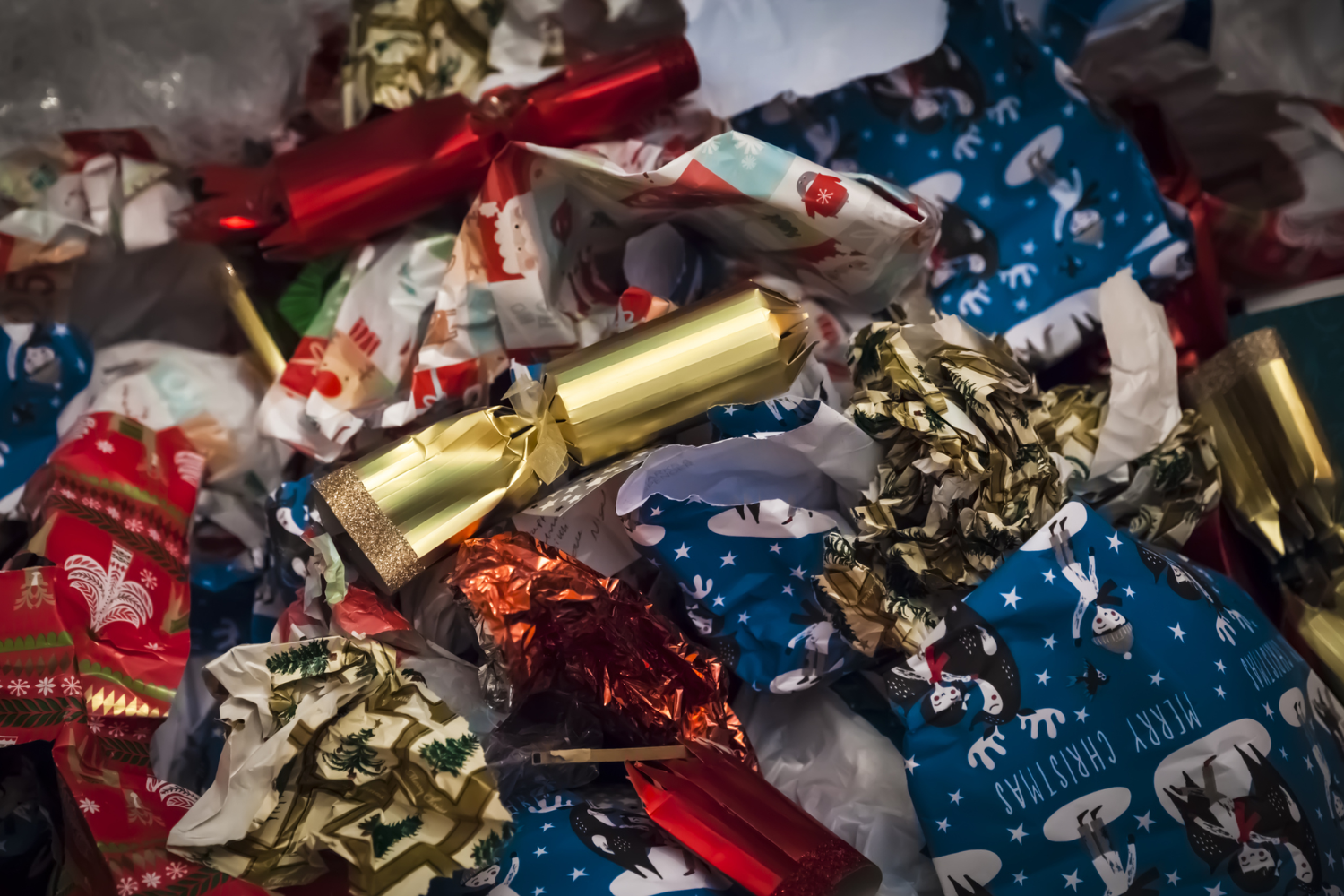
Image Source: Collingwood Today
There’s a shift happening, though. Reusable fabric wraps inspired by the Japanese tradition of furoshiki are gaining popularity. Simple options include brown kraft paper tied with twine, newspaper with hand-drawn illustrations, or even vintage scarves and cloth bags. These alternatives don’t just reduce waste, they also feel more personal.
And the best part? No plastic tape or glitter required.
Feasting, Not Wasting
In many parts of Europe, food waste during the holiday season spikes by as much as 30 to 50 per cent, according to data shared by the European Commission. It’s not that people intend to waste, but rather that generous planning turns into overbuying, and leftovers become landfill.

One small shift is planning meals with leftovers in mind. Many families now build “second day” menus into their traditions: turning roasted vegetables into soups, or repurposing desserts into breakfast treats. For anything that still won’t be eaten.
Celebration doesn’t require overabundance. Just care, and a bit of forethought.
Reimagining Decor
Cheap plastic decorations are often made to last a season, not a lifetime. And once they’re broken or out of fashion, they’re hard to recycle, meaning they’re destined for the bin.
Natural and long-lasting decorations offer a beautiful alternative. Think dried citrus slices, pinecones, handmade garlands, or seasonal branches. Not only are they compostable, but many of them can be collected on walks or made with family at home. Vintage stores are also full of timeless ornaments that feel nostalgic and are built to last.

Image Source: The Everyday Farmhouse
When we move away from novelty and toward things with story or permanence, decor becomes part of tradition — not waste.
Looking Past the Green Label
It’s easy to be drawn in by labels that say “eco” or “green” during the holidays, but many of these claims don’t hold up. A 2021 study from the European Commission found that over 42% of green marketing claims in the EU were exaggerated, misleading, or simply false. That number jumps even higher during seasonal sales.
Instead of taking sustainability claims at face value, look for brands that publish transparent impact reports or carry third-party certifications like GOTS, Fair Trade, or B Corp. Often, smaller businesses do a better job at telling the real story behind their materials and production.
Being a conscious consumer isn’t about being perfect, just about being curious.
Setting a New Tone
Sustainable holidays aren’t just about what you buy; they’re also about what you influence. Choosing to opt out of overconsumption doesn’t have to be quiet. You can share the idea of a handmade or second-hand gift exchange. Invite friends to a DIY craft night instead of a traditional gift swap. Or send a gentle message that experiences and time together are enough.
Research on behavioural science continues to show that people are most influenced by what those around them are doing. Your example might just be the one that makes someone rethink what matters.
More Joy, Less Stuff
You don’t need to stop celebrating, gift-giving, or gathering. But when you approach it all more thoughtfully, you’ll likely find that it actually feels more joyful — not less. A slower, simpler holiday season isn’t a compromise. It’s a recalibration.
And often, it’s in the quietest gestures that the most meaning is found.
Why is holiday overconsumption a problem?
Overconsumption during the holidays leads to massive increases in waste, including packaging, food, and unwanted gifts. It also fuels unnecessary production and emissions. Shifting toward conscious celebration helps reduce this seasonal environmental spike.
.png&w=3840&q=75)

.png&w=3840&q=75)
.png&w=3840&q=75)
.png&w=3840&q=75)